
Reimagining on-call software
Incident.io.
Context
When I joined Incident.io, the company offered incident management tools focused on communication and coordination inside Slack. But customers still relied on third-party on-call products like PagerDuty and Opsgenie to route alerts — and they hated them.
PagerDuty in particular was powerful but dated: complex configuration, clunky UX, and a mobile app that was notoriously painful to use. Many of our customers were actively asking, “When are you going to build this too?”
Building our own on-call system was an enormous opportunity. PagerDuty is a billion-dollar business doing this one thing; if we could design something simpler, faster, and friendlier, we could unlock huge value for our users — and for the company.
Problem
On-call software touches every layer of an organisation: alert ingestion, routing, scheduling, escalation, and notifications. It’s technically deep and full of configuration edge-cases.
PagerDuty’s complexity allows it to handle every imaginable setup — but that same flexibility makes it painful to use day-to-day. Our challenge was to re-imagine on-call from the ground up: preserve the power, remove the pain.
Approach
We built a small, tight, cross-functional team of design, product, and engineering, and worked with a handful of design-partner companies who had volunteered to shape the product with us. We met weekly, shared designs and prototypes, gathered feedback, and onboarded them gradually as new features landed. This cadence gave us immediate validation that what we were building worked for real teams of different shapes and sizes.
I led design across the entire experience — from alert sources and routing through escalation paths, schedules, and configuration UI. There was an enormous amount to design quickly, so I focused on building a scalable design system early on, ensuring consistency across surfaces and helping engineering move fast.
Our goal wasn’t just to clone PagerDuty — it was to improve it in almost every way:
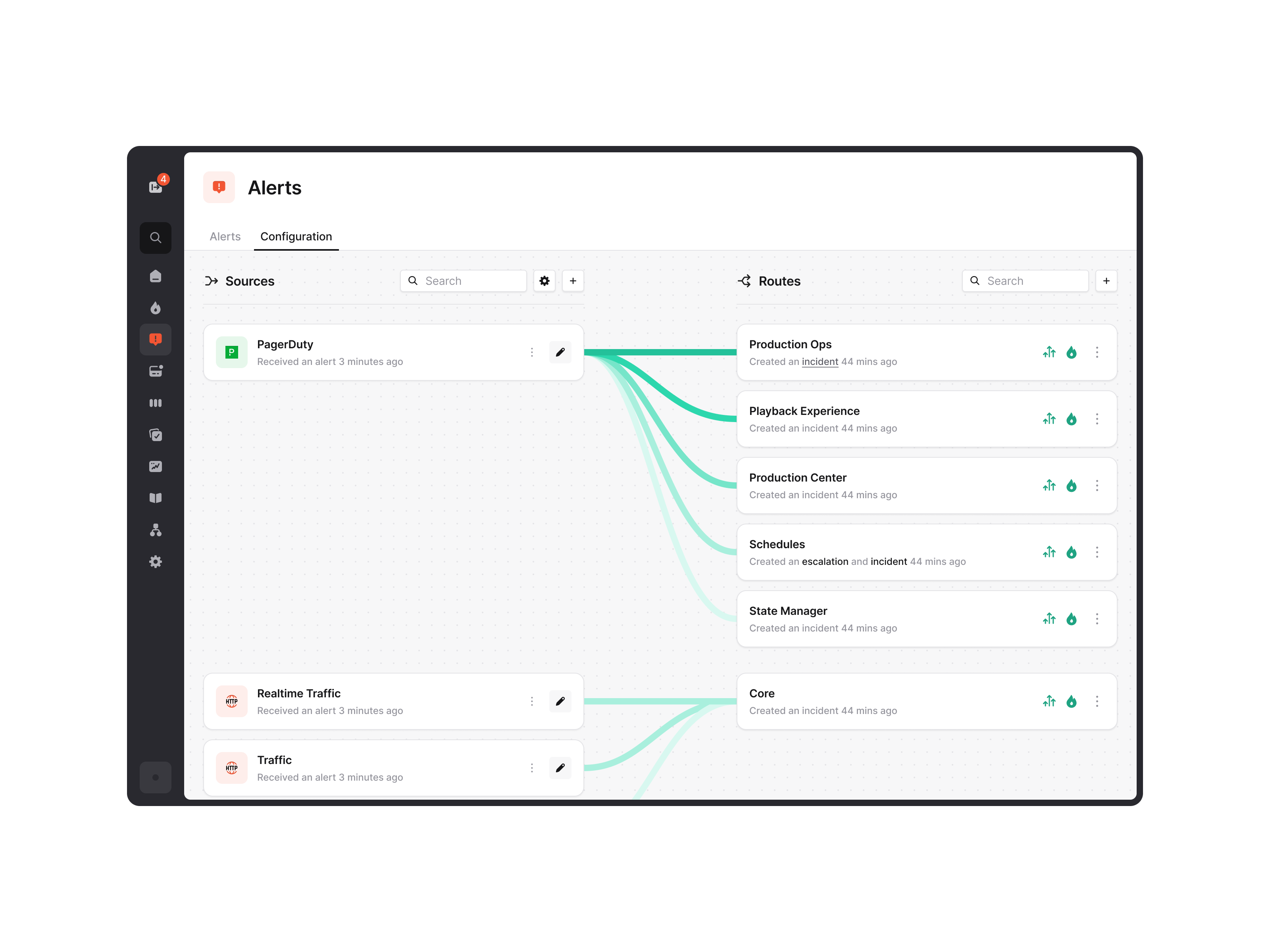
- Smarter alert routes that removed duplication (no more thousands of routes per service).
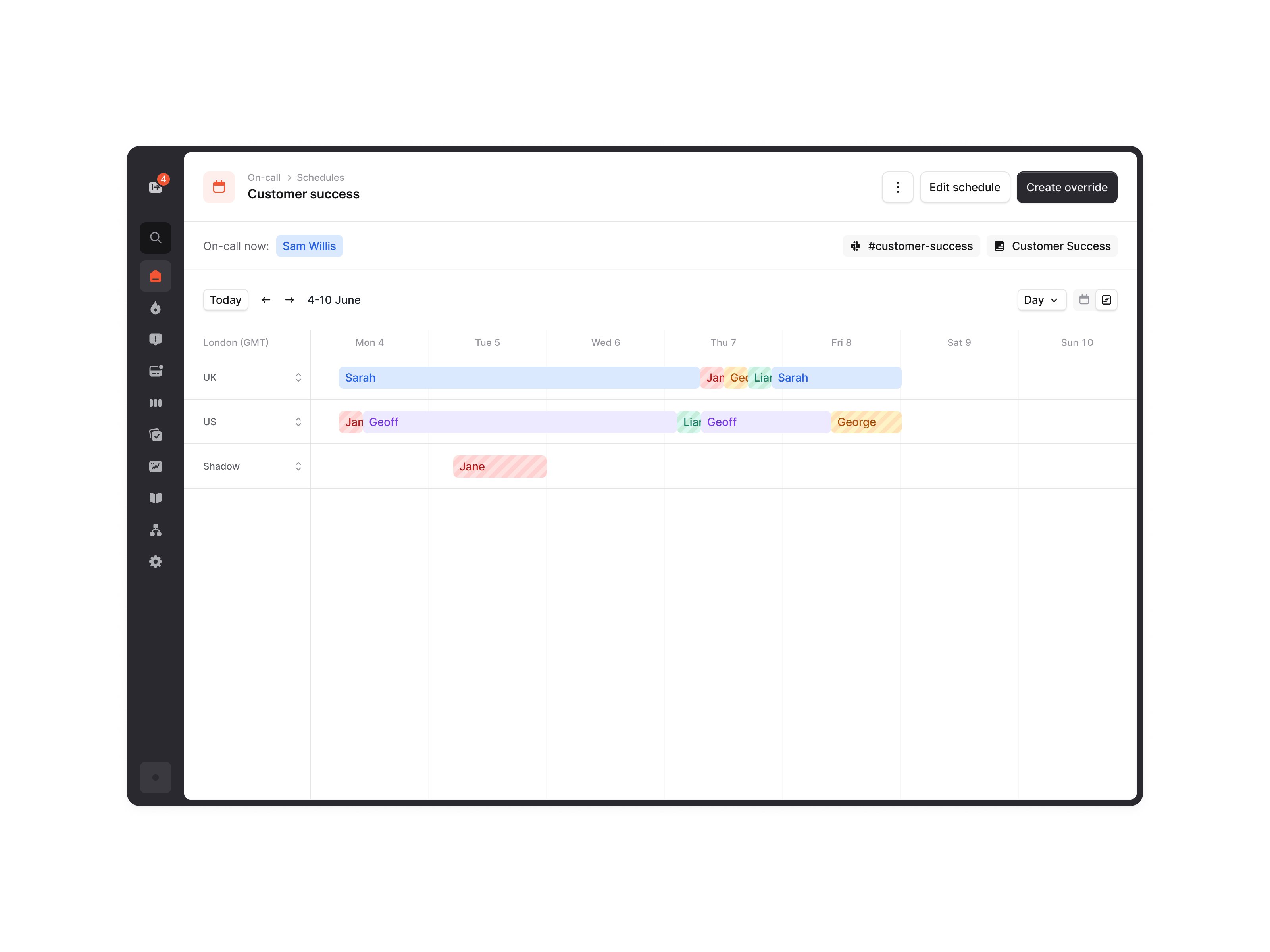
- Intuitive scheduling tools that made handovers easy to visualise.
- A calm, modern interface that reduced stress during incidents.
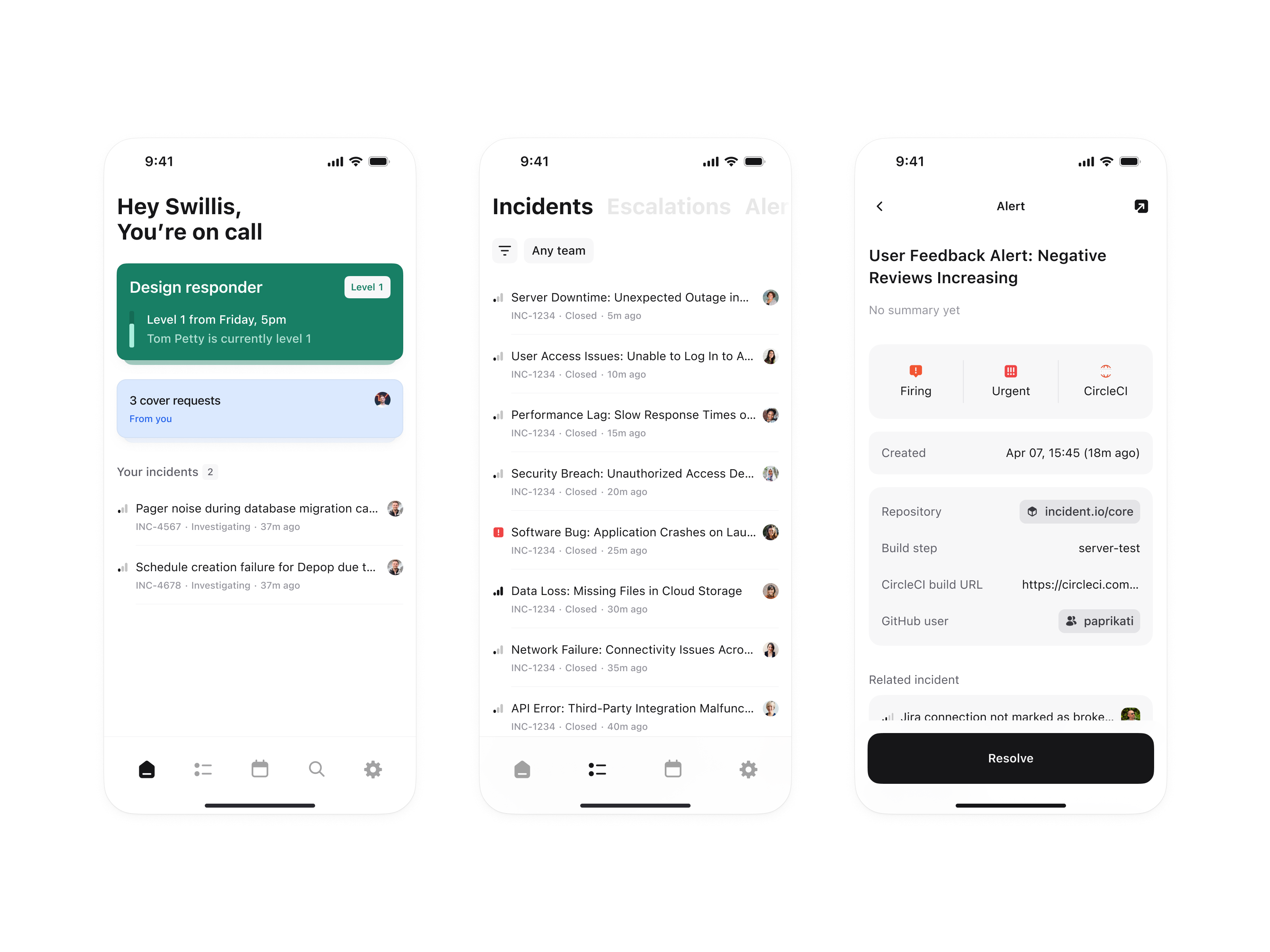
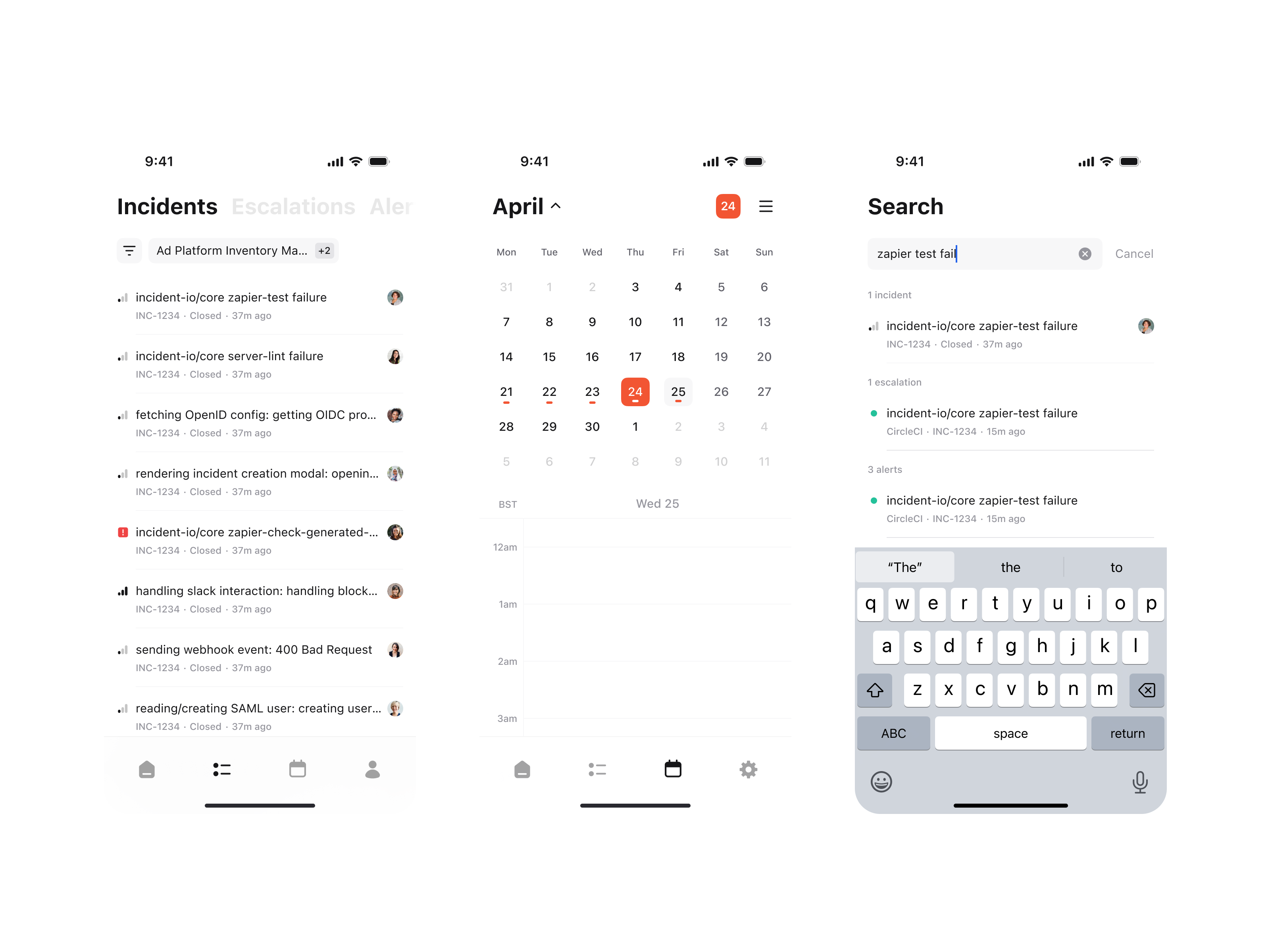
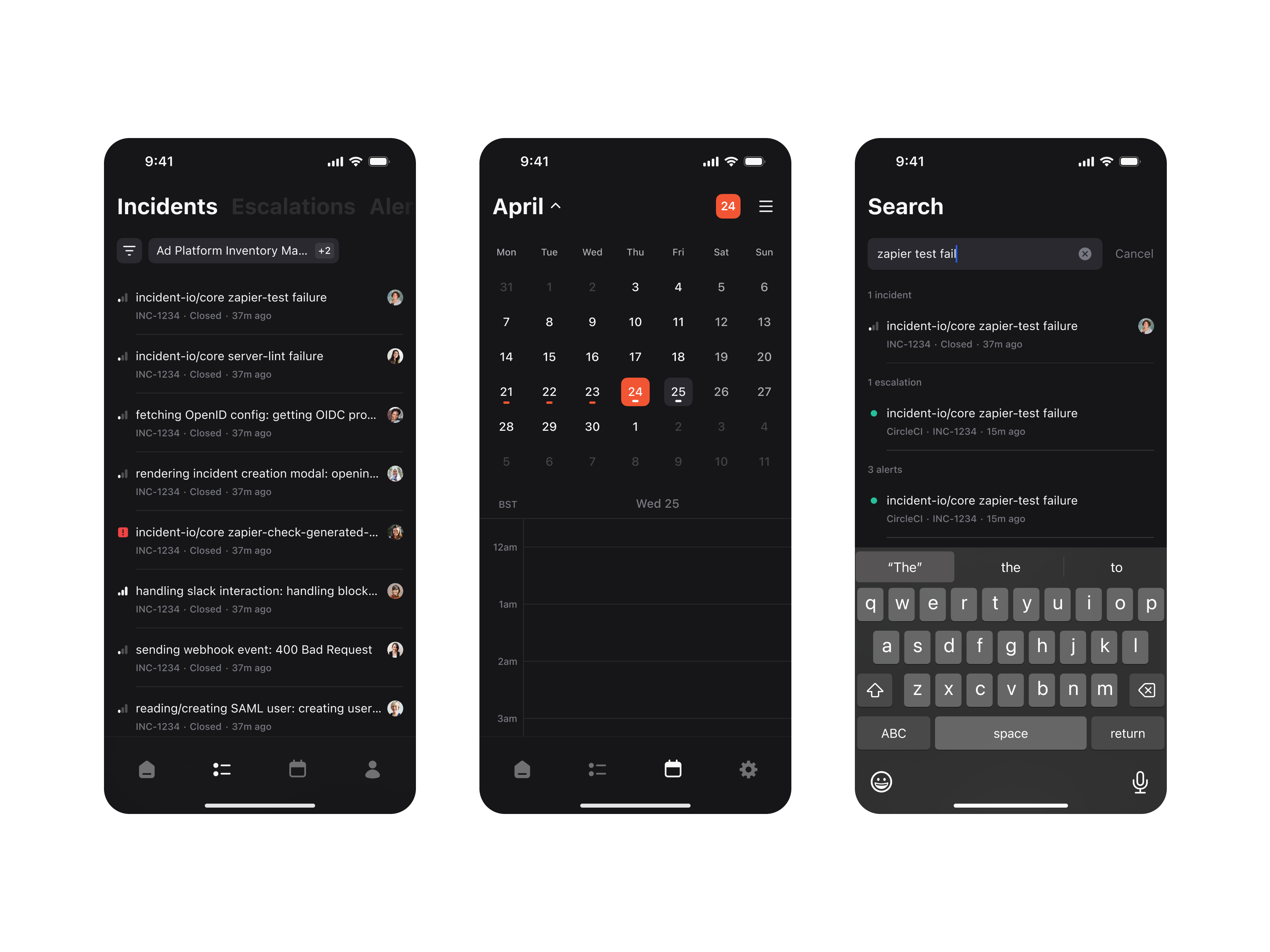
- A genuinely useful mobile app — fast, reliable, and designed to wake you up without overwhelming you.
Collaboration
I worked closely with PM and engineering throughout, co-creating prototypes and testing them with customers. Because I code, I could jump into the front-end where needed — giving precise feedback, fixing UI issues directly, and helping accelerate delivery.
Our design-partner feedback loops meant the product evolved in lock-step with real usage: we could see what confused people, fix it, and ship again the same week.
Multi-surface design
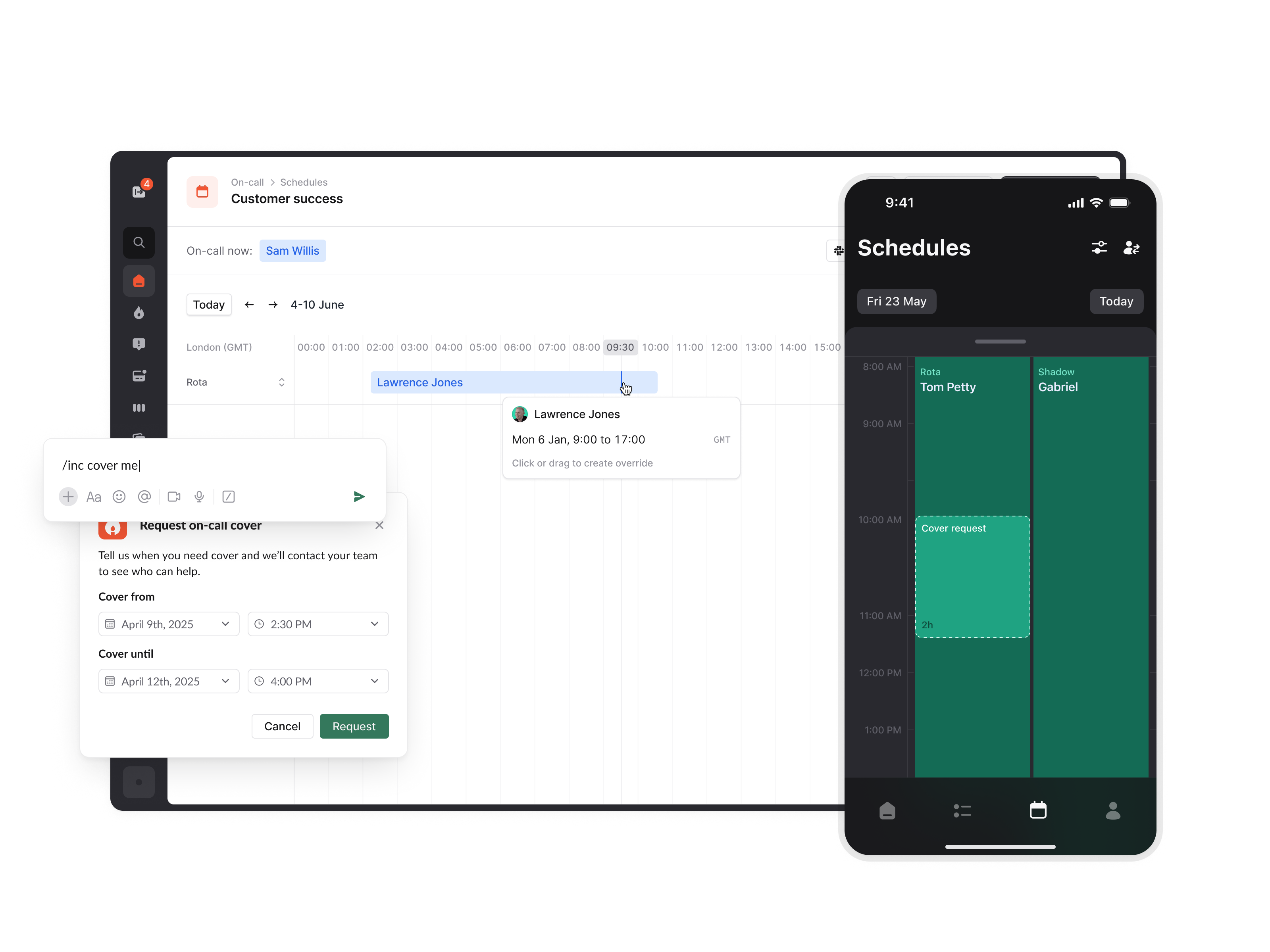
Designing the experience meant orchestrating three key touchpoints:
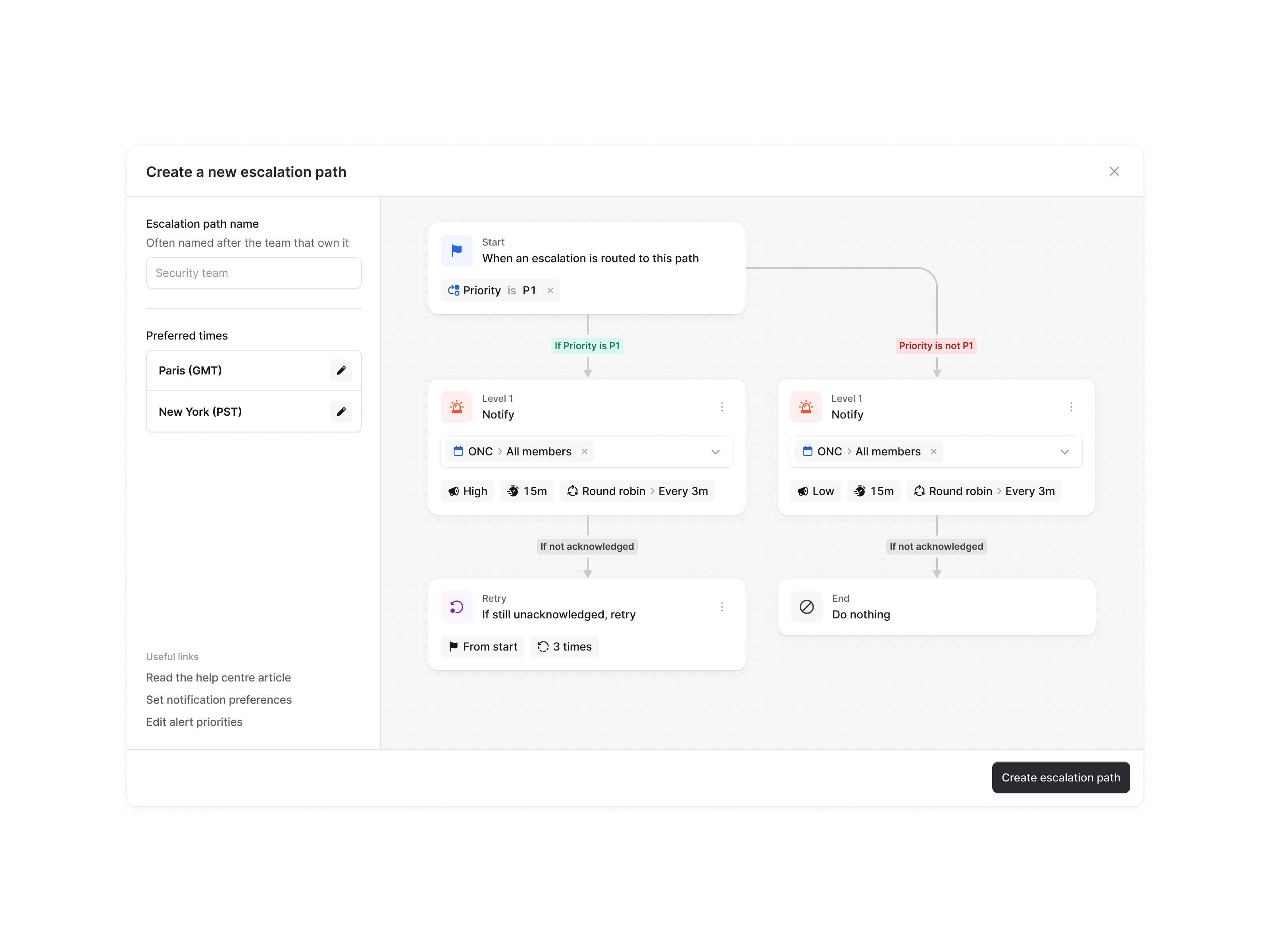
- Web UI — where admins configured schedules, escalation policies, and alert routing.
- Slack — the heart of most incident discussions, so we deliberately “existed” where users already were.
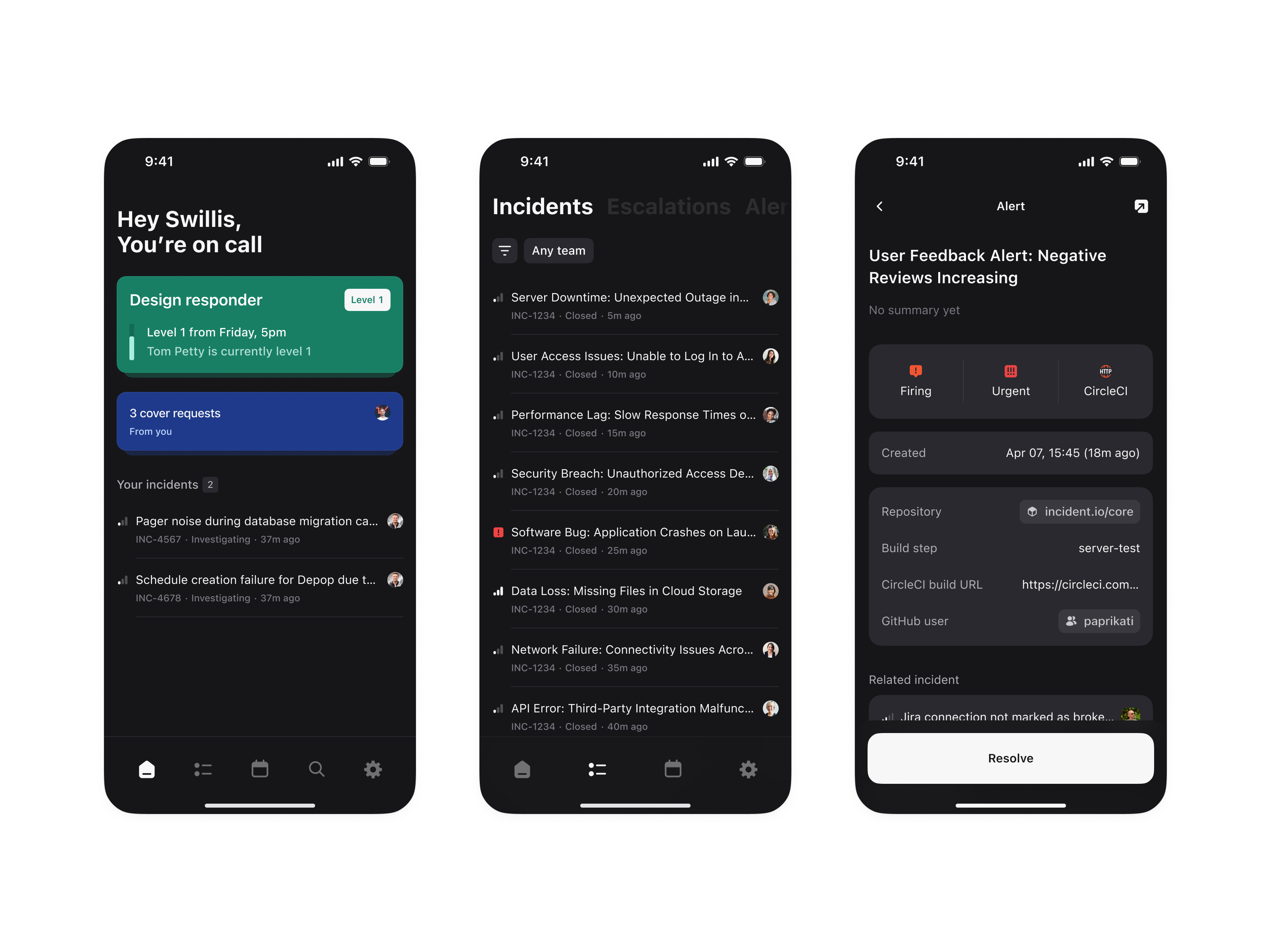
- Mobile App — the first mobile product Incident.io had ever built. It was designed to be interruptive by necessity, so I pushed early for light and dark modes to support use day and night.
Solution
A cohesive on-call platform with intuitive scheduling, visual escalation policies, and deep Slack integration — all underpinned by a cleaner, more rational configuration model.
The design emphasised clarity, calm, and confidence. Every interaction was built to feel obvious, fast, and reliable — a deliberate contrast to the stress of traditional on-call tools.
Impact
The launch was a major milestone for the company. We hosted a public launch event, onboarded early customers like Intercom, and generated $3m in revenue in our first year. Adoption among existing “Response” customers exceeded targets, as many migrated away from PagerDuty and Opsgenie.
Feedback from both customers and our design partners was consistently clear: “It’s so much nicer and easier to use.”
The work established a new benchmark for how Incident.io designs complex, high-stakes products — setting the foundation for future enterprise growth and proving that thoughtful design can reshape even the most entrenched software category.
